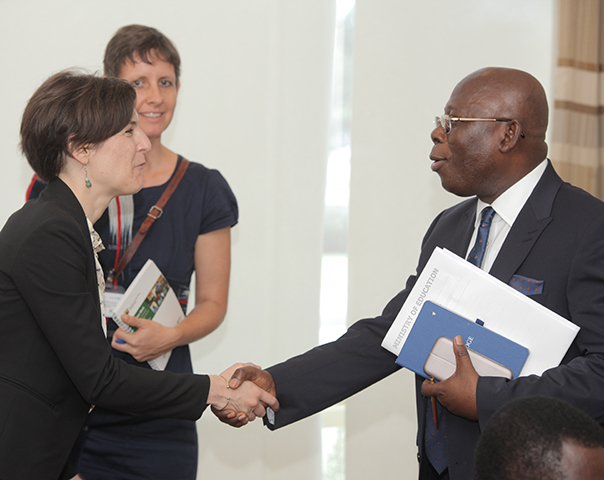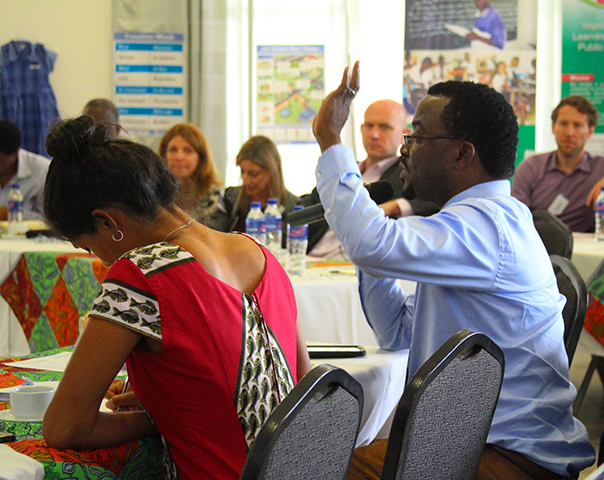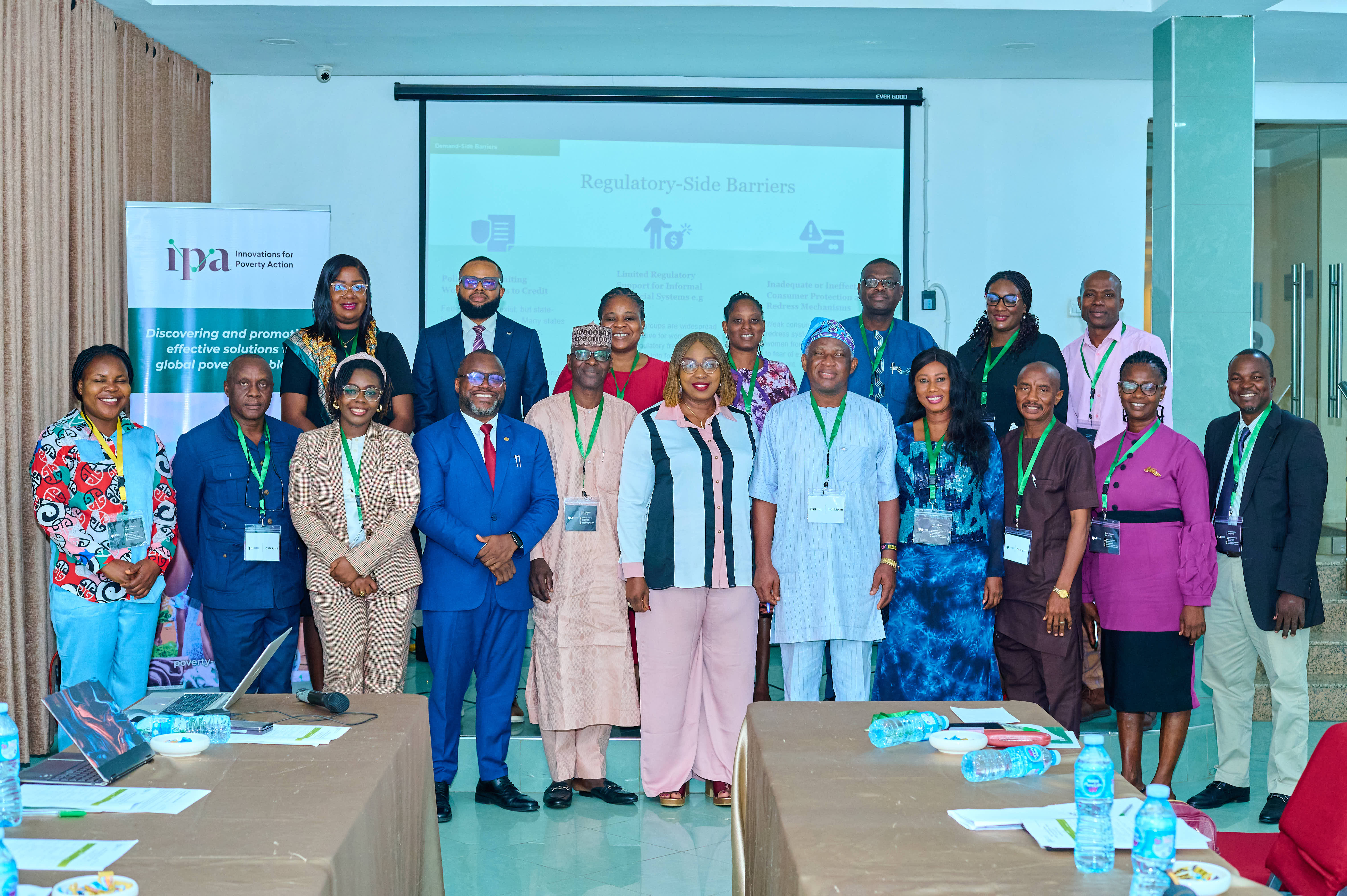
A cross-section of the members of the Research Coordinating Committee on Women's Economic Empowerment in Nigeria at an inaugural two-day convening held in Abuja, Nigeria. © 2026 NathOgbu
IPA Nigeria's Women's Economic Empowerment (WEE) portfolio is driven by the belief that rigorous evidence can transform systems when it is generated and applied in partnership with the institutions responsible for change. Our work focuses on producing and translating high-quality research into practical solutions that expand women's access to credit and capital, strengthen financial inclusion, and address structural barriers to women's economic participation. By working closely with government, financial institutions, researchers, and development partners, we ensure that evidence informs policy, product design, and program implementation.
We are delivering this through four interconnected workstreams:
- Ecosystem Mapping of Policy and Evidence Needs: We are engaging key actors across Nigeria's WEE and financial inclusion to map existing evidence gaps, understand institutional research priorities, and identify where rigorous evidence can have the greatest policy impact for women's economic empowerment.
- Evidence Generation: Through a structured evidence synthesis process, a multi-stakeholder Research Coordinating Committee (RCC), and targeted research implementation, we are building a national evidence base on women's access to credit and capital. The RCC brings together government, financial institutions, civil society, and academia to co-create and steward a Gender/WEE Research and Learning Agenda for Nigeria.
- Evidence Application: We are translating evidence into action through Technical Evidence Dialogues, policy engagement, and direct technical support to institutions, by spotlighting evidence-backed approaches to women's credit access and exploring how these can be adopted or adapted within existing institutional frameworks.
- National Gender Embedded Evidence Lab: We are establishing a National Gender Embedded Evidence Lab in partnership with the Federal Ministry of Women Affairs and Social Development; placing an IPA technical team within the Ministry to co-generate evidence, strengthen internal analytical capacity, and ensure findings are applied directly to policy and program design from within government.
Together, these workstreams are helping to build a more inclusive financial and policy ecosystem, one that enables women entrepreneurs and underserved populations to access the resources, opportunities, and support they need to thrive.