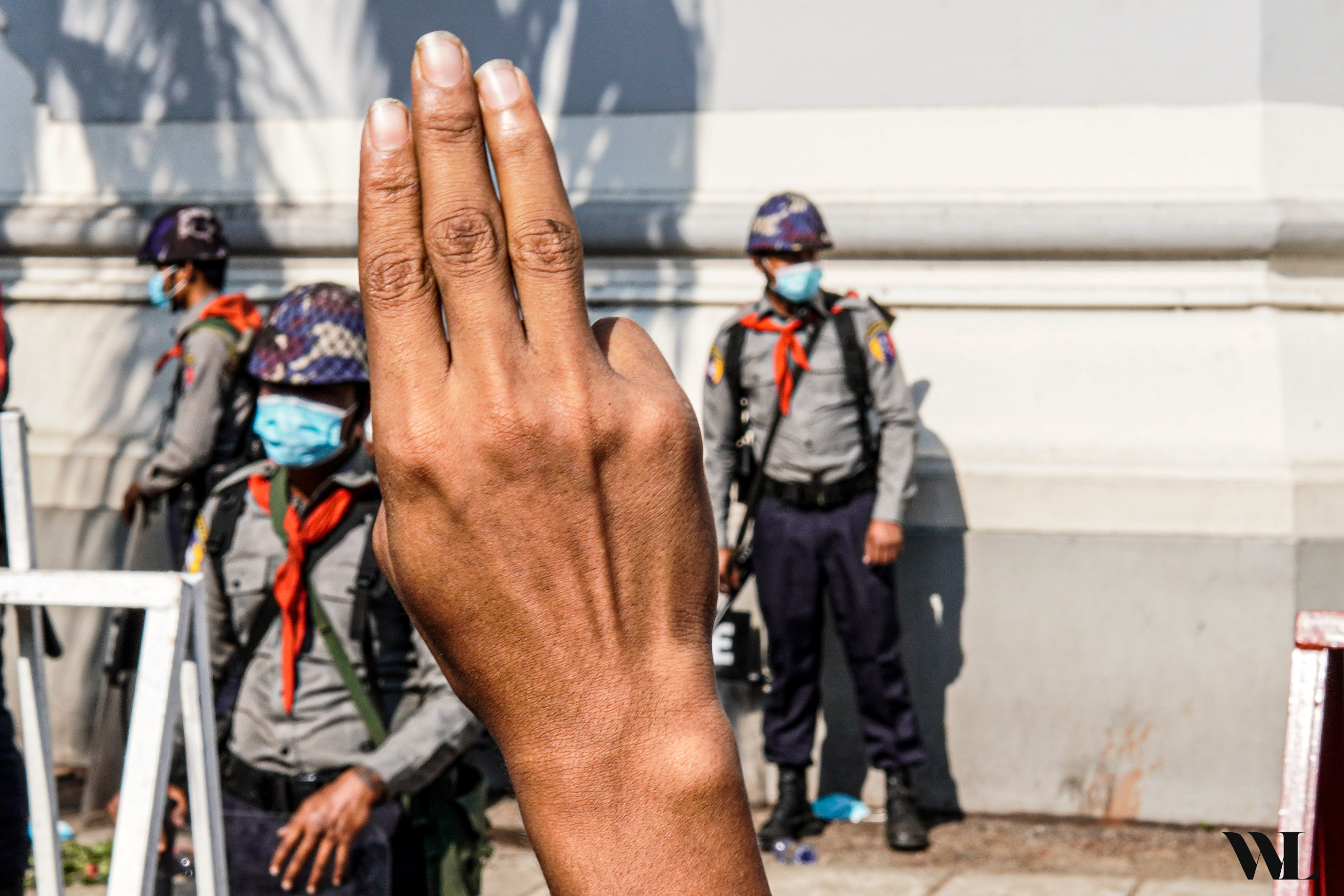
Over the past two decades, the internet and social media have expanded rapidly to all corners of the world. While these new technologies have liberalized access to information and communication channels, they have also introduced new platforms for surveillance and propaganda. As such, the internet can be characterized as a “double-edged sword” for society, introducing new freedoms as well as oppressions. This duality is especially evident in the case of Myanmar, where a majority of the population was first exposed to the internet within the past ten years. In this paper, the researchers use a DiD design to estimate the effects of the internet empirically by exploiting geographic variation in access as well as temporal shocks to exposure.
They find that reducing internet access leads to a reduction in the prevalence of demonstrations—but not other forms of political conflict—during the months following a military coup. However, as internet freedoms are eroded, the effect on protest activity disappears. The researchers argue that this shift can be explained by a change in the nature of political discourse online. Moreover, in the long run, the researchers find that internet access is associated with more political violence and higher levels of military control across Myanmar. Taken together, the results show that the internet can serve as both a tool of liberalization and oppression, conditional on the government’s capacity to monitor and exert influence over the network. These findings are especially relevant for developing economies in which widespread internet access is relatively recent.
IPA supported the initial development of this study in 2022, including research design, relationship building, and preliminary data collection to better understand the conflict dynamics in Myanmar and the role of social media. In particular, IPA supported the initial gathering of information on the location of cell phone towers and internet outages in Myanmar after the coup, as well as data collection on coup-related Facebook activity.
For a limited time, a generous anonymous donor will match online donations up to $50K. Donate today to double your impact while helping provide steady, sustainable support to IPA.