











Schools as Platforms for Agricultural Technology Adoption and Student Retention: Evidence from Rural Liberia

Header Block
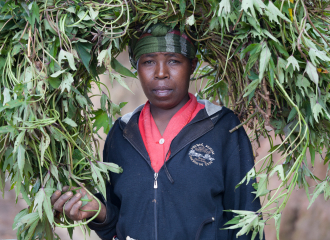
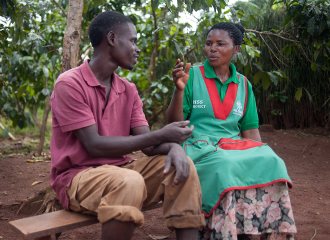
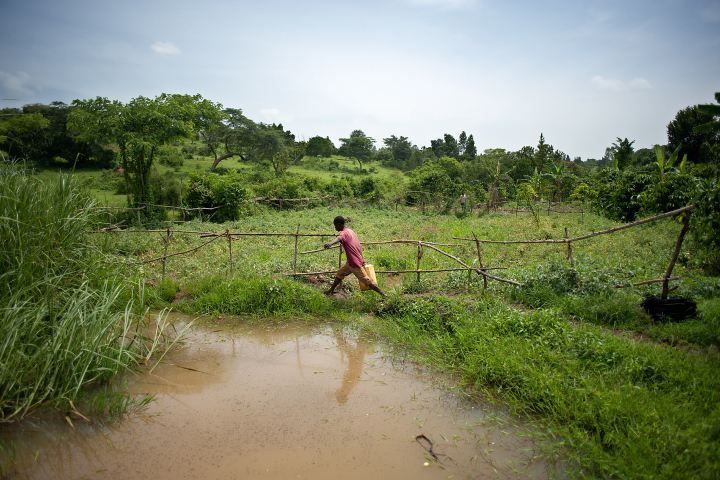
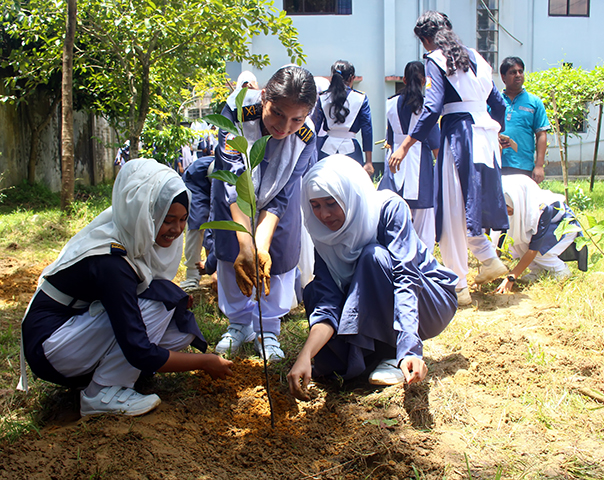
In this Image A group of 4-H club members working in a school garden © LIBPEDIA 2024

The Challenge

Agricultural extension—the process of sharing new information, techniques, and best practices with farmers—is important for increasing innovation and productivity in low- and middle-income countries. However, many households lack access to extension services, leading them to continue using outdated practices. This is the case in Liberia, where yields for staple crops rice and cassava are half the Sub-Saharan Africa average. Moreover, to meet productivity needs, most able-bodied household members—including children—work on the family farm. As a result, children in rural Liberia often miss and drop out of school—20 percent of secondary-aged children (ages 15-17) were out of school in 2019/20, and 84 percent were overaged.1 These disruptions limit their educational and economic opportunities for the future.

School-based agricultural programs present an opportunity to tackle both of these challenges simultaneously. Evidence suggests that bringing agricultural training into schools can improve youth knowledge of modern practices and prepare them for a career in farming. Moreover, IPA evidence from the environment sector in the Dominican Republic shows that targeting youth can create positive ripple effects in knowledge, awareness, and attitudes in communities. Can leveraging schools as extension networks both keep students in the classroom and catalyze agricultural technology adoption at home?

The Program

The global youth development organization 4-H developed a school-based agricultural training program to provide youth with practical training in agriculture. In this program, students join clubs and tend to school farms, receive regular visits and training from agricultural extension officers on promoted agricultural technologies, conduct home garden projects, and participate in extracurricular events to strengthen their leadership and life skills. The program also has an agribusiness focus for students to profit from their entrepreneurial farming activities.

The Evaluation

In partnership with Agricorps, 4-H Liberia, and IPA Liberia, researchers conducted a randomized evaluation to measure whether this program increased households’ adoption of modern agricultural practices and kept students in school. A total of 197 schools across Liberia participated in the intervention, with 100 schools randomly receiving the program and 97 schools serving as the comparison group. Since the awareness of school events is typically low among parents in low-income countries, parental engagement was encouraged in a random subset of program schools through promotional video sessions or invitations to annual farmer field days.

Results

When parental engagement was included, the school agricultural program was highly effective in increasing agricultural technology adoption. Relative to comparison group schools, students’ adoption of the promoted mix of soil management techniques rose by 15.7 percentage points, while parents’ adoption increased by 13.6 percentage points. In particular, the program’s impacts for parents were two to three times greater than other extension programs targeting adults.

Beyond the agricultural impacts, the program also improved students’ education and livelihoods when parents were involved. For instance, school dropouts fell by 4-5 percentage points, school attendance rose by 18 days on average, and students’ annual savings increased by USD 4 (a 21 percent increase) due to their entrepreneurial activities. In addition, more students were saving for university and thinking of pursuing a career in agriculture.

Researchers found that parental engagement worked by increasing interactions between parents and students. These interactions include parents’ visits to school farms, the annual farmer field days, and students’ management of farms and usage of new techniques outside schools—all of which improved parents’ exposure to new technologies.

Altogether, results suggest that school-based agricultural training programs can be effective to improve technology adoption and student livelihoods and encourage rural households to view agriculture and education as complementary.

Cost-effectiveness

An IPA cost-effectiveness analysis estimated that every 2025 USD 100 spent on the program led to an additional 0.31 parent households adopting promoted techniques, 0.18 additional years of education for students, and an increase of USD 8 in student savings.

Sources

1. Ministry of Education, Republic of Liberia. (2022). Education Sector Plan 2022/23–2026/27.


Implementing Partners

Agricorps Logo
4-H Liberia

Funding Partners

USAID Logo
FID logo
Wellspring Philanthropic Fund
UN FAO Logo
National Science Foundation