

The Challenge
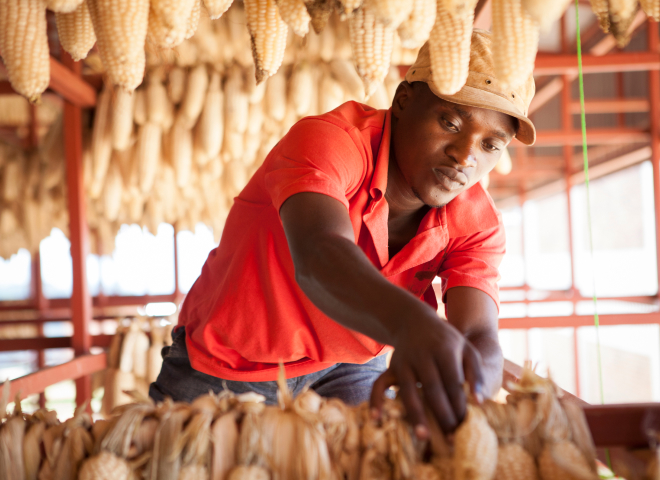
With the increase in the world's population and the growing demand for food, agriculture is an essential sector for economic development and global food security. However, as the effects of climate change become stronger, global agriculture faces challenges in meeting the productivity needs.1 One of these challenges is a slowing farming population, as younger generations are increasingly perceiving agriculture as an unsustainable livelihood. As such, there is a significant need to find effective ways to motivate young people into agricultural careers to reach the Sustainable Development Goals. For instance, IPA evidence from Liberia suggests that in-school agricultural training programs not only can increase adoption of modern practices that can improve profitability but can also improve educational attainment and life aspirations.
In Costa Rica, the agricultural sector plays a key role in supporting rural development and environmental sustainability, particularly focusing on low-carbon farming practices that reduce greenhouse gas emissions and minimize resource waste.2 Despite this, the sector faces challenges, including youth leaving rural areas—and subsequently, agriculture—and moving to urban centers for better opportunities.3 There are also ongoing gender biases that limit equal opportunities, especially for young women.4 Such challenges may hinder Costa Rica’s ability to create effective policies for long-term food production in the face of climate change.
The Program
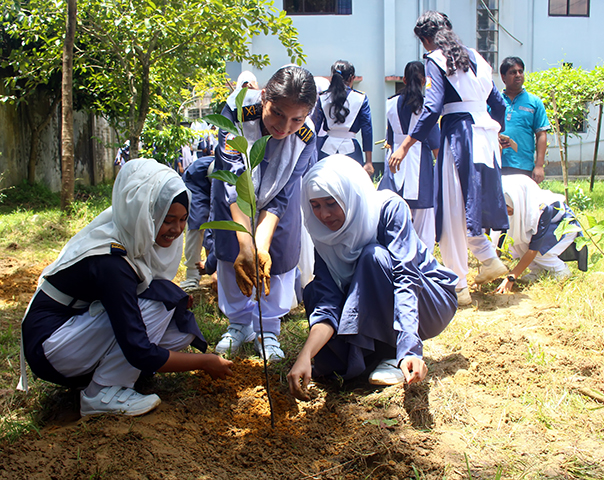
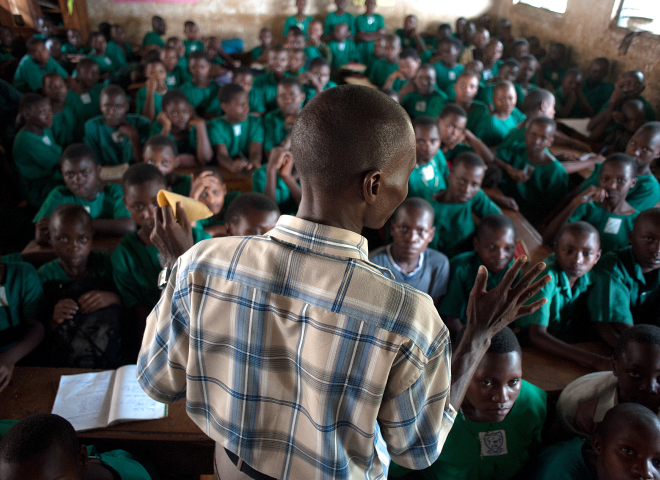
To respond to this challenge, the Ministry of Education, with support from IICA and IPA, implemented a new educational program to strengthen learning in agricultural, biological, and environmental sciences. The program delivered two four-hour in-person workshops to 10th, 11th, and 12th grade students from the Agricultural and Livestock Production speciality in technical schools. In the workshops, students used digital educational resources in individual and group activities to improve their knowledge and develop competencies in sustainable agriculture.
The first workshop addressed soil management, including soil science, key soil properties and their importance for productivity, sustainable agronomic techniques, and rehabilitation of degraded land and soil. The second workshop focused on carbon neutrality, its importance and benefits, the circular economy (environmentally sustainable production), Costa Rica’s carbon neutrality program, and climate action. The workshops also had cross-cutting themes on teamwork and the importance of women in agriculture.
The Evaluation
Researchers partnered with IPA, the Ministry of Public Education, IDB, and IICA to conduct a randomized evaluation to measure the impact of the agricultural workshops. Specifically, they measured students’ technical knowledge, understanding of sustainable agriculture, perceptions of the agricultural sector, gender equity in the sector, and motivation to pursue careers in agriculture. The evaluation involved 1,634 students in 36 professional technical schools across 7 provinces. The students were randomly assigned to either receive the workshops or serve as the comparison group.
Results
The workshops had a positive impact on how students viewed agriculture. Relative to the comparison group, students in the program were 0.08 standard deviations more likely to see agriculture as a positive and important field, a modest improvement. The effects were concentrated among students who actually attended the workshops, who also experienced greater gains in knowledge about soil care and carbon neutrality—the two main topics covered in the training.
Beyond perceptions and knowledge of agriculture, the workshops had mixed impacts. In terms of gender attitudes, students were 0.09 standard deviations more likely to express equal views about the role of men and women in farming, indicating strong effects. However, the workshops did not change students’ motivation to learn more about or enter a career in agriculture or impact their teamwork.
Results overall suggest that focused workshops can improve their perception towards agriculture and gender inclusivity, but adjustments should continue to be made to increase effective student participation.
Sources
1. OECD/FAO (2022), OECD-FAO Agricultural Outlook 2022-2031, OECD Publishing, Paris, https://doi.org/10.1787/f1b0b29c-en.
2. Food and Agriculture Organization of the United Nations (FAO), “Costa Rica Country Profile,” https://www.fao.org/in-action/scala/countries/costa-rica/en
3. IICA, “Costa Rica’s Vice-President visits IICA and encourages collaborative efforts in organic agriculture and distribution channels to improve agriculture sector profitability,” IICA, August 4, 2022
4. CABI, “Gender Analysis of Youth Engagement in Agriculture: Findings from Costa Rica,” July 2024, https://www.cabi.org/wp-content/uploads/CABI-Gender-Analysis-findings-2024-July.pdf
Funding and Research Partner
Implementing Partners


