


The Challenge
Across the world, young people in low-income, rural settings face intertwined constraints that limit their economic livelihoods. These constraints include limited access to capital, few income-generating opportunities, and low aspirations and self-confidence.1 The Ultra-poor Graduation Approach—which bundles financial support, training, and psychosocial components—has proven effective in addressing such challenges simultaneously to help lift people out of poverty. Yet evidence remains limited on the approach’s scalability, cost-effectiveness, and effectiveness for young people—young men in particular—when implemented by governments at a national level.
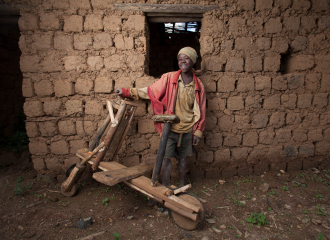
Niger offers a crucial setting to test the viability of a youth-oriented graduation program. Rural areas in particular face challenges like chronic food insecurity, exposure to climate shocks, and scarce non-agricultural job opportunities.2 As such, for young men, these challenges are amplified, with limited economic opportunities beyond the agricultural sector, social safety nets only reaching a small share of the population in need, and migration to other countries for greater prospects becoming increasingly risky.3 In a country where administrative and financial capacities are limited, can a government-led graduation program cost-effectively improve the livelihoods of this vulnerable population?
The Program
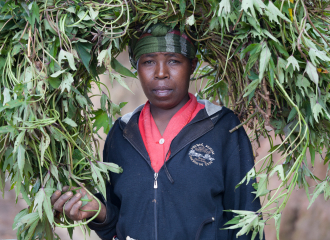
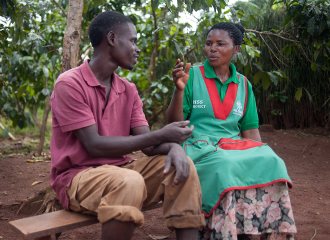
The Youth Employment and Productive Inclusion Program (PEJIP) is a six-month graduation program developed by the government of Niger and the World Bank to increase entrepreneurship for young men and women (aged 15-25) in rural areas. The program includes a psychosocial component, micro-entrepreneurship training, soft-skills training, savings encouragement through village savings and loan associations (VSLAs), and cash transfers totaling approximately USD 160 per recipient. Across its three waves (from 2020-2023), the PEJIP program reached 32,000 young people.
The Evaluation
In collaboration with Niger's government and the World Bank, researchers conducted a randomized evaluation to measure the impact of the third wave of PEJIP. Researchers also assessed whether a simplified version of the program without the training component could be scalable and cost-effective. Additionally, the cash support was provided either as monthly transfers or as a lump-sum grant to test which mechanism better supports entrepreneurship and economic empowerment.
The intervention involves 135 villages from Diffa, Tahoua, and Tillabéri regions of Niger. In each village, half of the participants were men and half were women to compare impacts by gender and understand the different constraints each faces. The villages were randomly assigned to the following groups through public lotteries:
- Full PEJIP program (with either monthly transfers or lump-sum grant)
- PEJIP program without training (with either monthly transfers or lump-sum grant)
- Comparison Group
Researchers are measuring PEJIP impacts on household consumption, income-generating activities, food security, assets, financial engagement, migration, psychological well-being, women’s empowerment and agency, and maternal and child health. They collected data among 3,358 households at the beginning of the intervention in July 2022 and in June 2023 three months after the program was finished. IPA’s Social Protection Program’s New Wave Graduation Fund is providing funding support for an additional round of data collection to measure whether impacts are sustained two years after the program ended.
Results
Results will be available in 2026.
Sources
1. Nga Thi Viet Nguyen and Xavier Devictor, “When poverty meets fragility: Why the next decade of global poverty reduction is at stake,” World Bank Blogs, June 24, 2025
2. Eric Rwabidadi, “Rural futures in focus: Niger,” August 20, 2025, IFAD, https://www.ifad.org/en/w/opinions/rural-futures-in-focus-niger
3. Andrew Shepherd, Abdoutan Harouna, Vidya Diwakar, Aïssa Diarra, Lucia Da Corta, Cecilia Poggi, “Youth of Niger: migration as a double-edged sword for labour inclusion” Policy Note, French Development Agency, https://www.afd.fr/en/ressources/youth-niger-migration-double-edged-sword-labour-inclusion
Implementing Partners


