From October 7-8, 2026, IPA presented several sessions at the Center for Financial Inclusion’s Financial Inclusion Week (FIW). Learn more below:
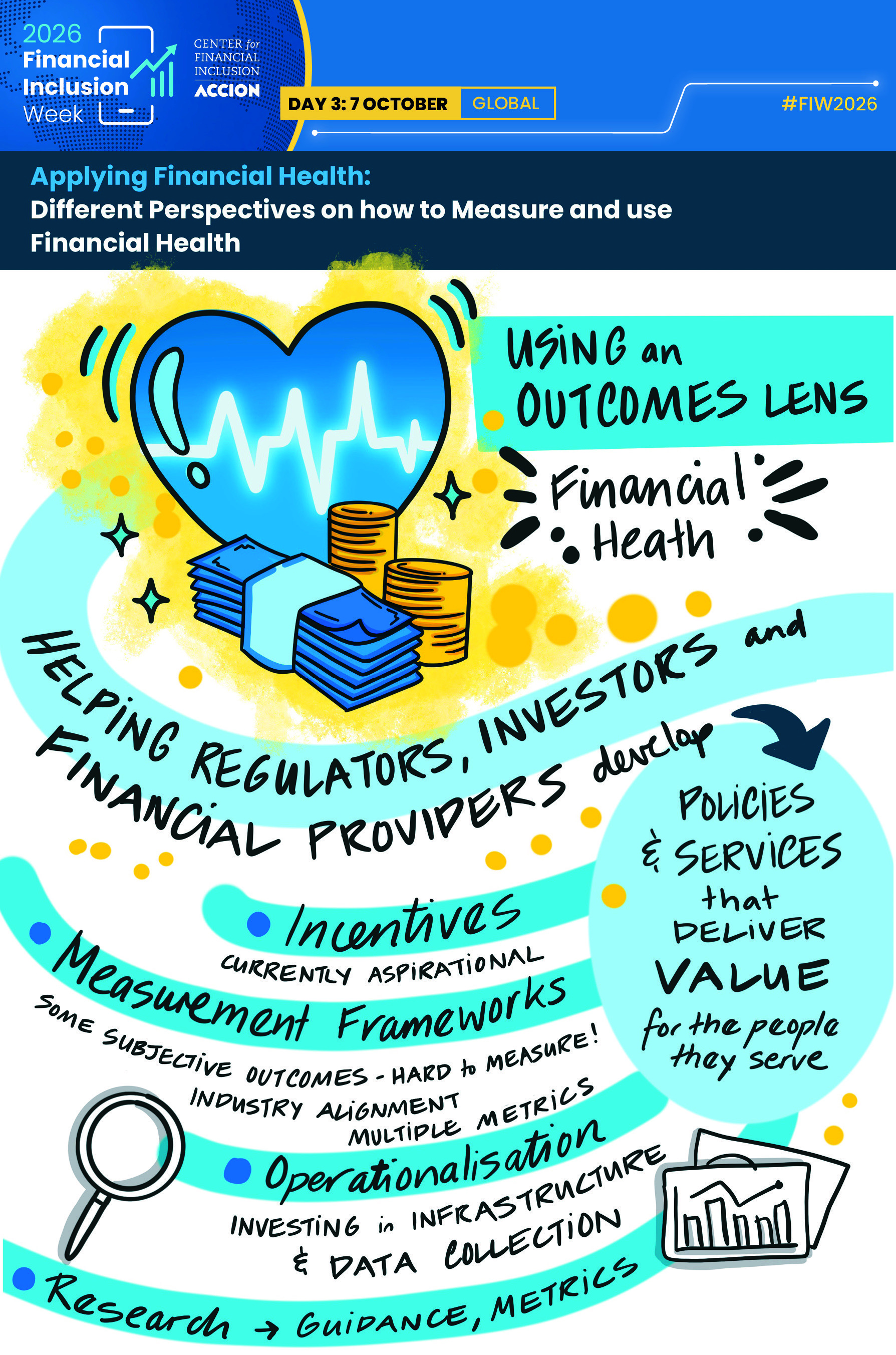
1. Applying Financial Health: Different Perspectives on How to Measure and Use Financial Health | Wednesday, Oct 7
This interactive discussion delved into how different organizations are using (or not using) financial health. For those who are using it, how have they operationalized the concept and how does it change their day-to-day work? For those that are still struggling to use financial health, where are the pain points, knowledge and evidence gaps on how to use it effectively? What are some of the best strategies for improving financial health, and how can we test these to ensure they are effective?
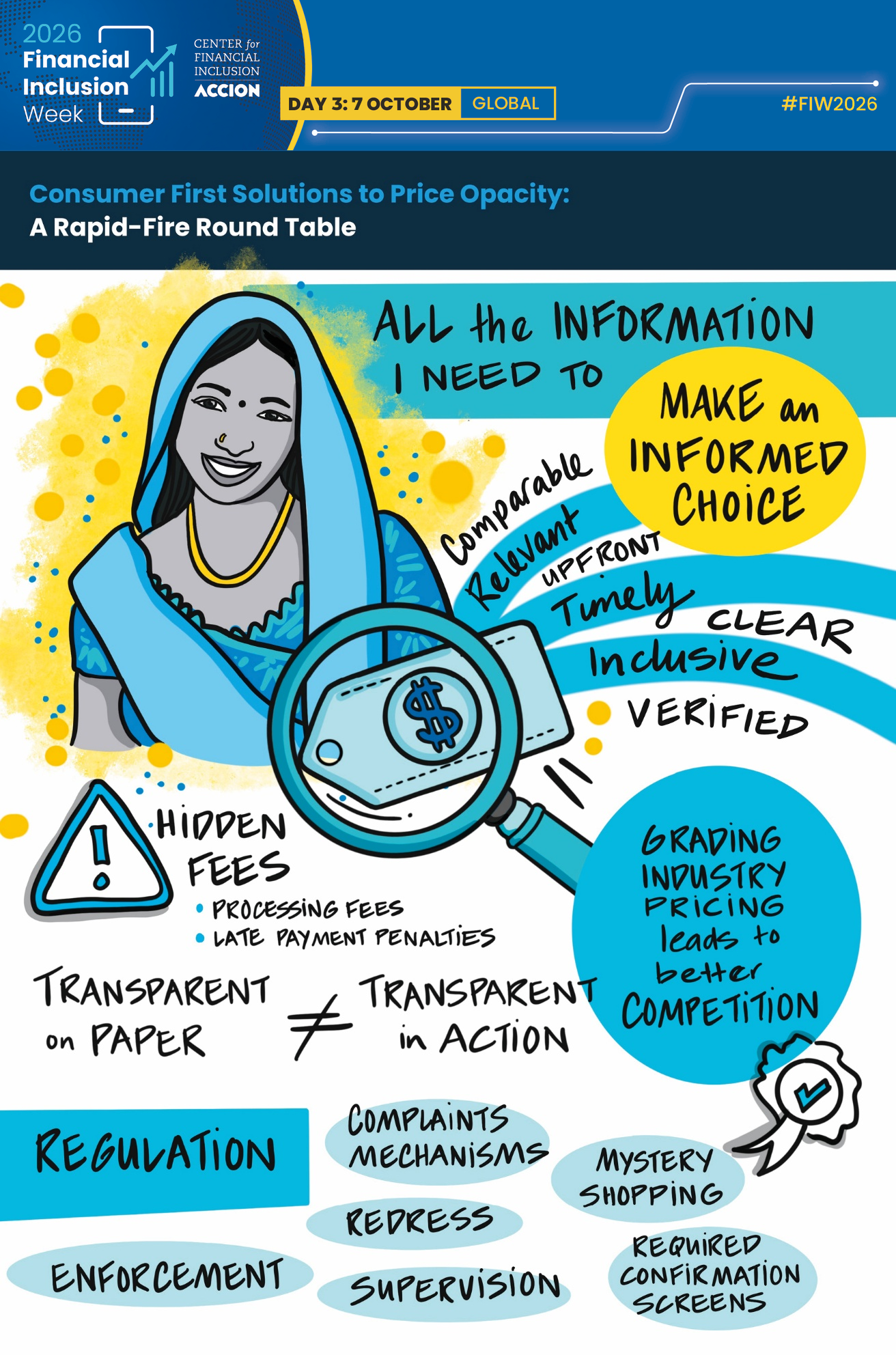
2. Consumer-First Solutions to Price Opacity: A Rapid-Fire Roundtable | Wednesday, October 7
Across lending, digital payments and other financial products and services, consumers face a consistent pattern of hidden costs, opaque fee structures, and inaccessible disclosures. This transparency deficit is not incidental—in many cases it is by design, embedding unfair commercial advantage at the expense of informed consumer choice. This can have a twin effect: both to quietly overcharge and sometimes to even defraud outright. A transparency deficit both creates higher costs for consumers and also the potential to be victims of scams.
This rapid-fire ecosystem roundtable brought together global experts with a consumer group voice from Consumers International's Membership to examine, challenge, and bring solutions to address systematic price opacity at a domestic and international level, a core barrier to inclusive innovation and consumer-friendly financial systems.
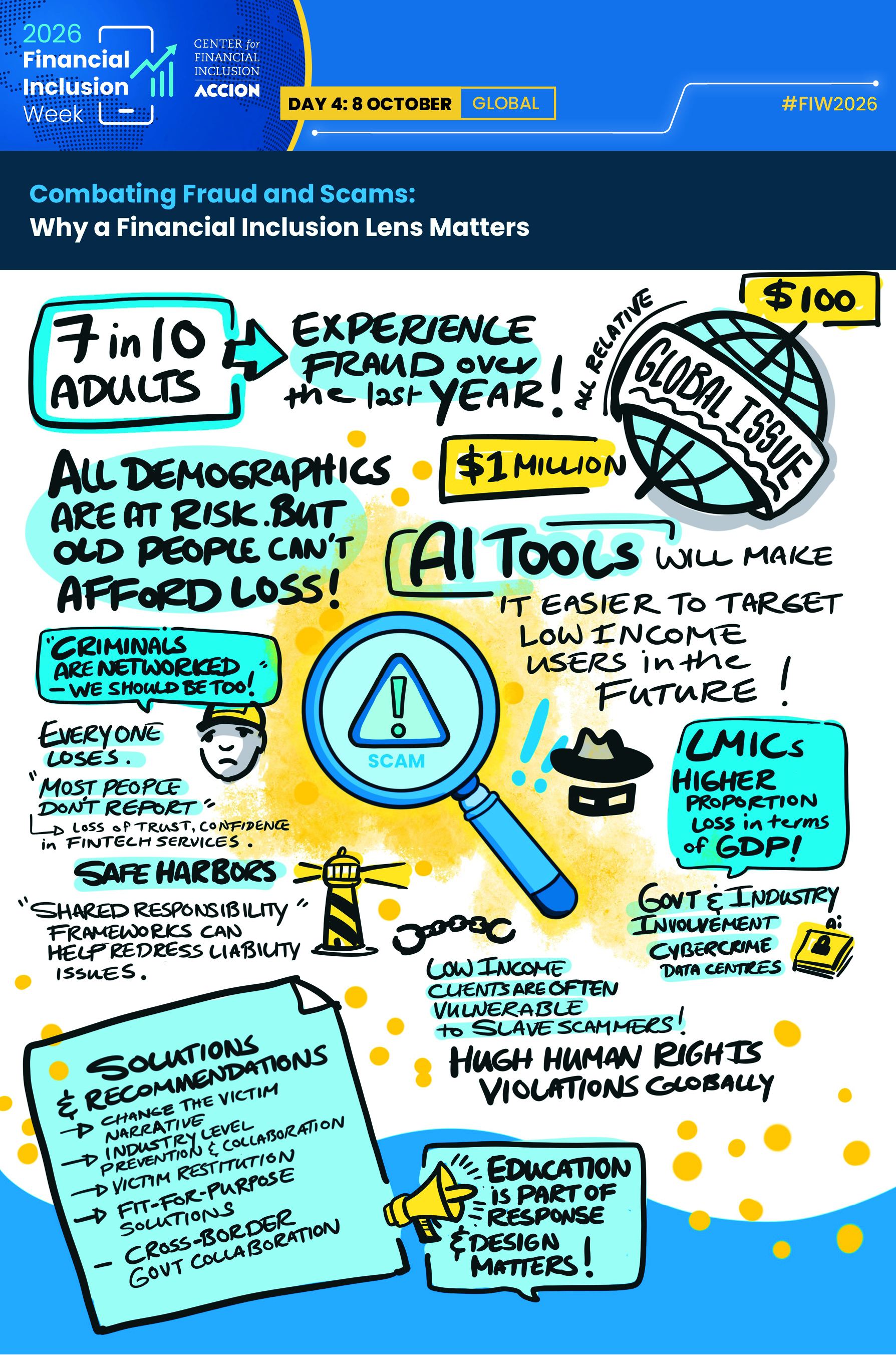
3. Combatting Fraud and Scams: Why a Financial Inclusion Lens Matters | Thursday, October 8
With the rapid global proliferation of fraud and scams, this session brought a financial inclusion lens to the conversation, examining how these crimes erode consumer trust and why a victim-centered approach is essential for an effective response. Speakers shared evidence on how fraud and scams affect low-income consumers, explored the shame and stigma that keep victims from seeking help, and highlighted emerging solutions to protect financial inclusion clients as threats continue to evolve.
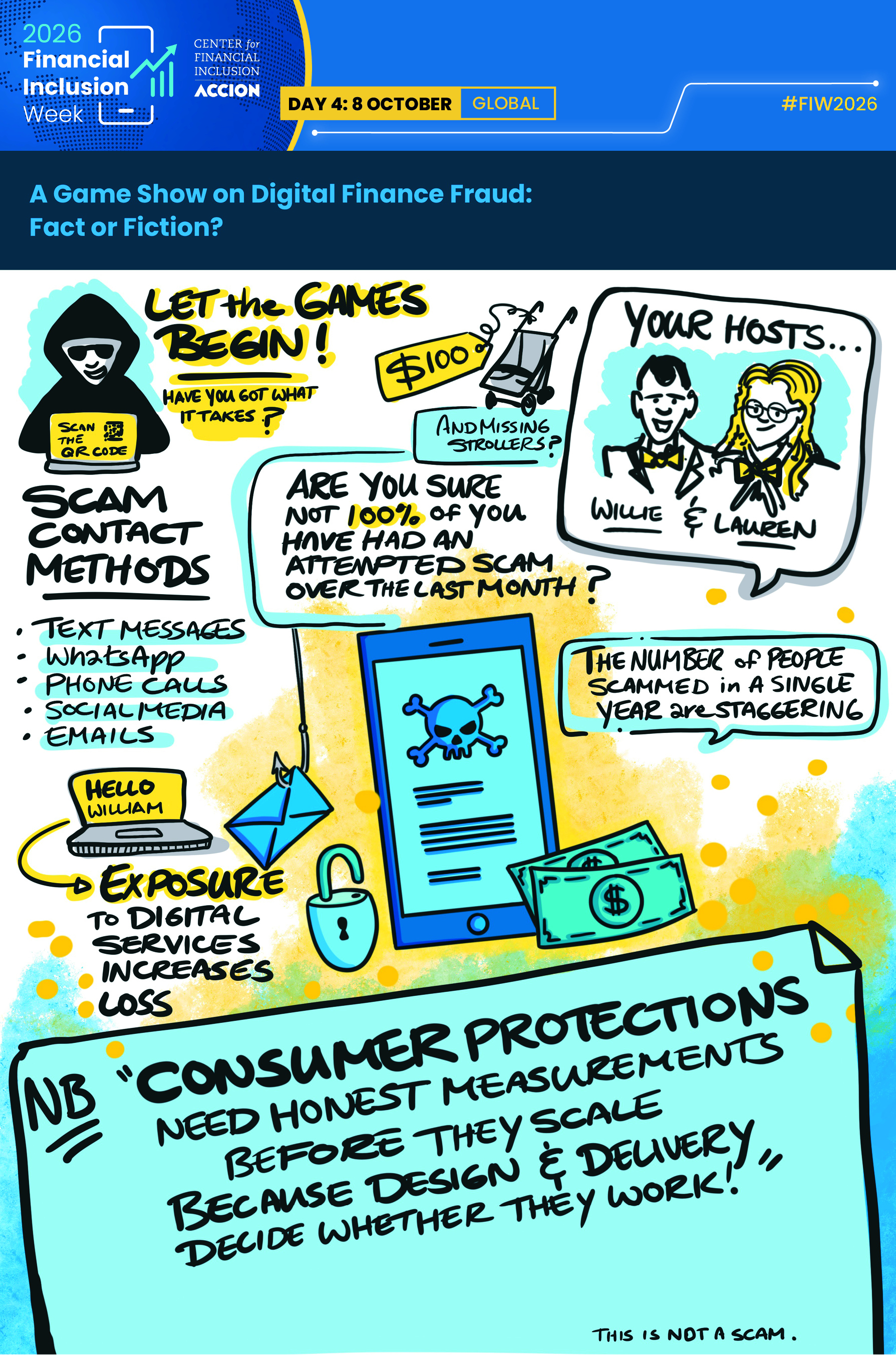
4. A Game Show on Digital Finance Fraud: Fact or Fiction?
Scams are a growing concern in digital financial services (DFS), as fraud becomes increasingly remote and is carried out at scale, often using artificial intelligence (AI). This session examined findings from Innovations for Poverty Action’s consumer protection surveys of digital finance users across nine countries, exploring how many users face scam attempts, how many lose money, and who is most affected.
The session also explored evidence from randomized controlled trials (RCTs) testing fraud awareness programs, examining which interventions reduced losses and which had counterproductive results. It highlighted the importance of measuring consumer protection outcomes before scaling interventions, emphasizing the role of program design and delivery in determining their effectiveness.
Double your impact by supporting IPA today
For a limited time, a generous anonymous donor will match online donations up to $50K. Donate today to double your impact while helping provide steady, sustainable support to IPA.