

The Challenge
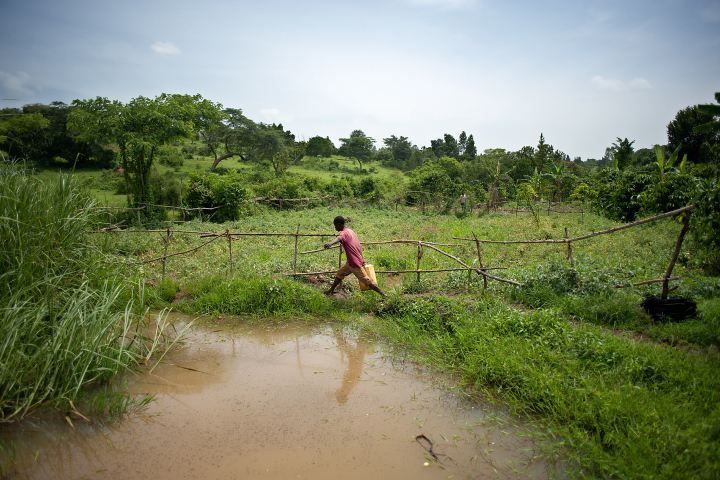
An increasing proportion of the world’s population in extreme poverty is concentrated in sub-Saharan Africa. Malawi exemplifies this issue, particularly in rural districts like Mangochi, where about 90 percent of households live below the international extreme poverty line. At least one-quarter rely solely on subsistence farming and informal daily labor for wages, and food regularly runs out before next harvest—at baseline, the study population scores 7.5 out of 8 on the World Food Program’s food insecurity scale, indicating frequently missing meals, selling possessions to buy food, and experiencing health issues. Such persistent conditions make it difficult for caregivers to provide for their children’s developmental needs. This is reflected nationwide: over one-third of children in Malawi are stunted—above the African average.1
Globally, graduation programs have shown strong results in removing the multiple barriers of extreme poverty, increasing household income, assets, and food security for years. However, important questions remain about how these programs can be adapted to generate stronger impacts for children’s health and development, reduce delivery costs, and scale effectively without losing impact. In addition, as families regularly contend with adverse setbacks (illness, spells of unemployment, etc.) that often push them back into extreme poverty,2 understanding whether graduation programs can help them weather these challenges remains critical. This study aims to address these gaps through a child-focused graduation model, offering lessons not only for Malawi but also for other low-income agriculture-dependent countries facing similar challenges. Although graduation programs have shown sustained promise, key questions remain about the mechanisms behind their success, how they can be scaled, and whether program timing relative to the agricultural calendar affects outcomes for farming households.
The Program
The local organization Yamba Malawi implements an ultra-poor graduation program to increase women’s empowerment and end child poverty. The program provides mothers with children under age 5 the standard graduation model including business training, a business startup grant of USD 300, monthly consumption support of USD 20 for the first six months, a basic phone, support for starting savings groups, and regular one-on-one life skills coaching. It also includes child-focused components: 1) a four-month training for mothers in early childhood development using indigenous stories and songs to teach child health, parenting practices, and nutrition; and (2) backyard vegetable gardens to increase consumption of nutritious food beyond the intervention.
The Evaluation
In collaboration with Yamba Malawi, researchers are conducting a randomized evaluation to measure how ultra-poor graduation programs move households out of extreme poverty and how they might be delivered more cost-effectively. IPA’s Social Protection Program’s New Wave Graduation Research Fund is funding data collection for two cohorts in their second year of the program and a third additional cohort. Although graduation programs have shown sustained promise, key questions remain about the mechanisms behind their success, how they can be scaled, and whether program timing relative to the agricultural calendar affects outcomes for farming households. Understanding these tradeoffs helps identify the most cost-effective way to expand the program while maintaining its benefits.
The evaluation will address several key questions: first, whether the program’s child-focused components can improve child health, nutrition, and well-being. It also explores how the program can be made more affordable to deliver without reducing its impact. It further investigates how program impacts change when the number of treated households per village increases. Another question focuses on the program’s timing in the agricultural season to most optimally support families.
Lastly, the evaluation looks into how the program helps families manage adverse shocks and whether building resilience against these shocks is a key mechanism through which graduation programs sustainably reduce poverty.
Villages in Mangochi district were randomly assigned to different program exposure levels: some villages had all eligible households receive the program, other villages had half of eligible households receive the program, and comparison villages did not receive the program.
This design enables researchers to see what happens when more families participate in the program: whether it increases local economic activity through higher consumer demand and spending (as has been observed for pure cash transfers) or whether too many households create similar businesses, leading to excessive competition.
Additionally, the three cohorts have been staggered so that the large cash grant is delivered either pre-harvest, post-harvest, or in the lean season. Since farming families’ resources and time constraints fluctuate across the year, finding the best point to launch the program and support them in starting their business could significantly improve its impact.
Co-funding from J-PAL is allowing for detailed early childhood cognitive and non-cognitive development assessments to be conducted alongside the evaluation. Intergenerational impacts are the natural next frontier in refining existing social protection programs.
Finally, researchers are tracking whether the program helps families handle and recover faster from adverse shocks. A distinctive feature of this study is its use of high-frequency fortnightly surveys over two years, which capture the timing and severity of shocks—such as illness, crop damage, and income disruptions—as they occur rather than relying on participants’ recall months later. This approach allows researchers to examine the causal relationship between shocks and poverty, and to test whether graduation programs resolve poverty partly by shielding households from the compounding effects of repeated setbacks. These insights will inform how future graduation programs can better build resilience and livelihood stability.
Results
Results will be available in 2027.
Sources
1. World Health Organization Data, “Prevalence of stunting in children under 5 (%),” World Health Organization, May 8, 2025, https://data.who.int/indicators/i/A5A7413/5F8A486
2. United Nations Department of Economic and Social Affairs, Policy Brief No. 169, How Shocks Turn into Crises: national policies for advancing social development in turbulent times, (December 17, 2024), https://desapublications.un.org/policy-briefs/un-desa-policy-brief-no-169-how-shocks-turn-crises-national-policies-advancing-social
Implementing Partner


