Agriculture

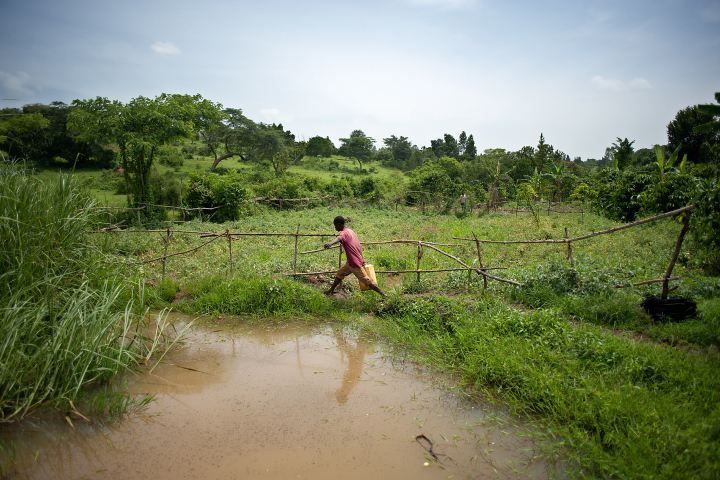
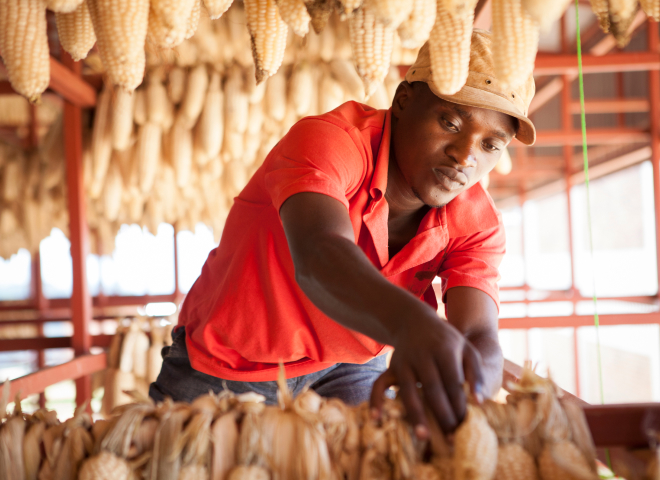
In this Image A farmer in Baguio, Benguet, Philippines. © 2019 Nathaniel Sison on Unsplash

Research Findings

Assessing the Effectiveness of Different Types of Seeds and Crop Insurance for Agricultural Productivity

Weather hazards cause significant hardship for small-holder farmers, and climate change is expected to further exacerbate vulnerabilities to extreme weather. Expectations of possible losses could discourage farmers from making productivity-enhancing investments and trap them in low-risk but low-return agriculture. In Kenya, the Agriculture and Climate Risk Enterprise (ACRE) and the Kenya Agricultural and Livestock Research Organization (KALRO) are implementing an intervention to improve agricultural productivity.

The program provides different types of seeds: traditional maize, sorghum, and green gram seeds or new improved stress-tolerant varieties of these crops, as well as different types of insurance—weather index-based insurance or picture-based insurance. Researchers are implementing an impact assessment of this intervention to improve its performance and respond to gender-specific needs. The study will generate indirect benefits for respondents by helping shape both our research trajectory and inform policymakers on what types of interventions increase farmers’ ability to make productive investments while being able to manage risks.

Expands +
Read More

Can Text Message Weather Alerts Improve Decision-Making and Investment Outcomes for Farmers in Ghana?

Farmers depend heavily on weather patterns and forecasts to make important decisions regarding their investments, such as determining the optimal timing for planting and harvesting crops or deciding whether to purchase index insurance to protect against adverse events. However, weather information is often unreliable, which can lead to significant negative consequences for farmers when the forecasts turn out to be incorrect. In collaboration with ignitia, researchers in Ghana are evaluating the impact of text messaging services providing weather forecast advisories on farmers’ investment decisions and outcomes.

Read More

Hidden Information and Market Failures for Crop Insurance in the Philippines

Farmers across the developing world face risk from hazards such as weather, pests, and crop disease, but largely lack insurance to manage these risks. One reason for this lack of viable insurance products may be that farmers know their plots and risks better than insurers, and react accordingly. In the Philippines, researchers offered insurance on randomly assigned plots to farmers, and found that farmers preferred to insure the plots that faced more risk. Farmers also invested less in fertilizer for insured plots, and those plots suffered from more preventable (pests and crop disease) than natural (flood and typhoon) damage. The findings suggest that information that is unavailable (at least in part) to insurance providers—the susceptibility of agricultural plots to damage and farmers’ effort to prevent damages—may be a substantial barrier to the functioning of crop insurance markets.

Read More

Related Topics

Environment

IPA's evaluations on this topic have included research on land conservation, recycling, the reduction of plastic bag waste, and the use of cookstoves to reduce indoor air pollution and fuelwood use.

Food Security

IPA's research on food security evaluates questions aimed at increasing agricultural productivity through technology adoption, improved farming techniques, and access to food markets.

Technology Adoption

IPA's research in this area explores ways to increase the use of proven technologies in agriculture—from the use of fertilizers to using a hand-pump to irrigate crops, and more—and also investigates the barriers to technology use.