










Increasing Legal Access for Migrant Victims of Fraud: Evidence from Nepal

Header Block
In this Image Bhangal, Budhanilkantha, Nepal. © 2023 Sagar Bhujel on Unsplash

The Challenge

Coercion in international migration remains a significant challenge. In Nepal, eight percent of migrant households have experienced fraud from a recruiter—including deception about job conditions, pay, or confiscation of documents. Despite this, only 23 percent of defrauded households have filed formal complaints, largely due to a complex case system that requires legal knowledge and documentation. As such, fraudulent recruiters can continue to operate with minimal legal consequences and perpetuate exploitation.

Given the challenges migrants face in resolving fraud cases on their own, inclusive and survivor-centered approaches are needed. Evidence from other contexts suggests that leveraging peers and community trust can be an effective method to increase engagement with formal institutions. Can bringing legal assistance directly to migrant communities unlock access to justice and compensation for fraud victims?

The Evaluation

In collaboration with People Forum, researchers are conducting a randomized pilot evaluation to measure whether community-based legal assistance can improve migrant access to justice and increase compensation outcomes from recruiter fraud and coercion.

The study plans to enroll 750 previous migrants and 380 prospective migrants in 128 villages in Provinces 1 and 2 of Nepal. The villages will be randomly assigned to the following groups:

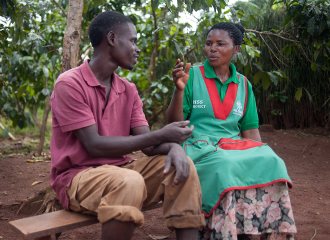
  • Legal assistance: Returnee migrant volunteers, trained and supported by a paralegal, conduct outreach to provide information and assistance in filing migrants’ cases.
  • Comparison: No intervention.

Researchers are measuring the intervention’s impact on migrant fraud survivors’ case filing rates, case status, compensation, and settlement outcomes. Researchers will also assess whether the intervention changes prospective migrants’ perceptions and beliefs about recruiters and migration.

Results

Results will be available in 2027.


Implementing Partner

People Forum for Human Rights Logo

Research Partner

CESLAM Logo