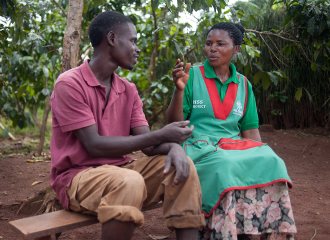
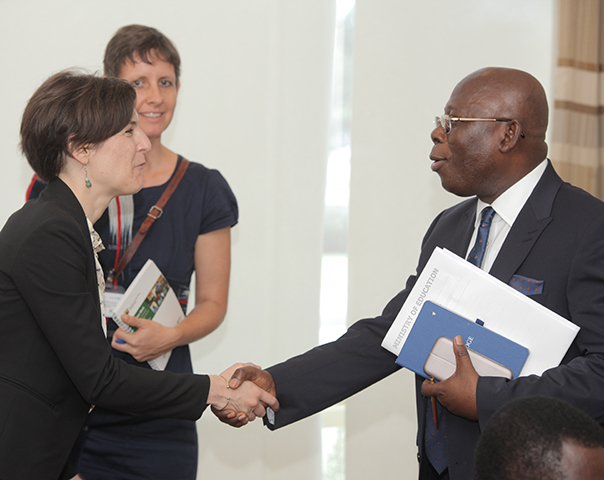
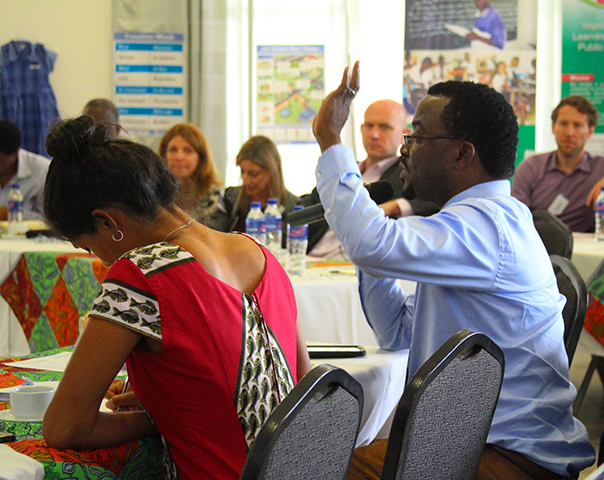
IPA Research Affiliates are researchers who work extensively on issues related to poverty and public policies in both developing and developed countries, and employ randomized evaluations when feasible to help learn what works, what does not, and why. They are the researchers who are heavily involved with IPA and make significant contributions to the development of the organization by helping direct our strategic and research direction.
Nava Ashraf
![]() |
Nava Ashraf is an Assistant Professor in the Negotiations, Organizations, and Markets Unit at Harvard Business School. Professor Ashraf received her Ph.D. in Economics from Harvard University in 2005, and her BA in Economics and International Relations from Stanford University. Nava's research combines psychology and economics, using both lab and field experiments to test insights from behavioral economics in the context of development projects in Africa, Latin America, and Southeast Asia. Her experiments address behavior change in health and health services delivery, in agricultural production, and in microfinance. She has conducted research on questions of intra-household conflict and bargaining in decisions related to finance and fertility, with a special focus on women's empowerment. She has been awarded a Queen's Jubilee Medal for service by the Government of Canada, and is the youngest person ever to receive the Order of British Columbia. Nava is a Faculty Affiliate of the Jameel Poverty Action Lab at MIT and a Fellow of the National Bureau of Economic Research. Prior to joining HBS, she worked at the World Bank on trade negotiations between Morocco and the European Union, as a consultant for several nonprofit organizations in developing countries, and as founder of a business skills training institute for women in west Africa.
|
Abhijit Banerjee
![]() |
Abhijit Banerjee is the Ford Foundation International Professor of Economics at the Massachusetts Institute of Technology. He is a graduate of the University of Calcutta and Jawaharlal Nehru University and received his Ph.D in 1988 from Harvard University. Abhijit is co-founder of the Abdul Latif Jameel Poverty Action Lab (along with Esther Duflo and Sendhil Mullainathan) and remains one of the directors of the lab. He is a past president of the Bureau for Research and Economic Analysis of Development and a former Guggenheim Fellow and Alfred P. Sloan Fellow. Abhijit serves as a research fellow of the National Bureau of Economic Research, the Center for Economic Policy Research, the Kiel Institute, the American Academy of Arts and Sciences and the Econometric Society. His fields of interest include Economic Development, Information Theory, Theory of Income Distribution and Macroeconomics. He has authored two books and numerous published journal articles and finished his first documentary film, "The name of the disease" in 2006. |
Lori Beaman
![]() |
Lori Beaman is an Assistant Professor of Economics at Northwestern University. She is a graduate of Northwestern University and received her Ph.D in 2007 from Yale University. Formerly a Robert Wood Johnson Scholar in Health Policy Research at the University of California, Berkeley, Lori received a UNICEF Grant for field work in West Bengal and was a Visiting Researcher at the International Rescue Committee in 2005. She currently serves as an Impact Evaluation Consultant for the Millennium Challenge Corporation. Lori's primary fields of interest include Economic Development and Labor Economics, with a focus on how social networks facilitate information transmission. Her recent work has evaluated the impact of a political affirmative action program on gender bias in rural India. |
Chris Blattman
![]() |
Chris Blattman is an Assistant Professor of Political Science. He holds a PhD in Economics from the University of California at Berkeley, and a Master's in Public Administration and International Development (MPA/ID) from the Harvard Kennedy School. Chris' research examines the causes and consequences of civil war, the reintegration of ex-combatants, post-conflict economic and social programs, and the development of new forms of governance and peace building after war. Much of his work applies field experiments (and natural experiments) to conflict and post-conflict scenarios. From 2005 to 2007 Chris co-directed the Survey of War Affected Youth http://www.sway-uganda.org in northern Uganda. He is currently evaluating peacebuilding and governance programs in Liberia and Uganda. Previous regions of field work include Kenya and India. Chris teaches courses on the political economy of civil war and terror, African development, and applied econometrics. |
Esther Duflo
![]() |
Esther Duflo is Abdul Latif Jameel Professor of Poverty Alleviation and Development Economics at Massachusetts Institute of Technology. She is a graduate of Ecole Normale Supérieure and DELTA (Paris) and received her Ph.D in 1999 from the Massachusetts Institute of Technology. Esther is co-founder of the Abdul Latif Jameel Poverty Action Lab (along with Abhijit Banerjee and Sendhil Mullainathan) and remains one of the directors of the lab, which in 2009 won the BBVA Frontier of Knowledge Award in the category of "Development Cooperation." She is also Director of the Development Economics Program at the Center for Economic Policy Research, a research fellow at the National Bureau of Economic Research, Board member at the Bureau for Research and Economic Analysis of Development and Founding Editor of The American Economic Journal: Applied Economics. In 2008 Esther was the recipient of the Prix Luc Durand-Reville by the Accademie des Sciences Morale et Politiques in France and in 2005 was awarded the Best Young French Economist Prize. Esther's work on agriculture, health and political participation, particularly in India, has resulted in numerous published journal articles, methodological papers and book chapters. In 2009, Esther was named International Chair of Knowledge Fighting Poverty by the College de France. The same year, she received the Calvó-Armengol International Prize, an honor awarded in recognition of contributions to the understanding of social structure and its implications for economic interactions. |
Pascaline Dupas
![]() |
Pascaline Dupas is an Assistant Professor of Economics at the University of California, Los Angeles. She is a graduate of Ecole Normale Supérieure, Paris I-Sorbonne and received her Ph.D in 2006 from EHESS-PSE and DELTA (Paris). Formerly an Assistant Professor at Dartmouth College and a Visiting Fellow at New York University, Pascaline received the Rainer Arnhold Fellowship of the Mulago Foundation for 2005-2007 and founded TAMTAM Africa, a non-profit organization which provides insecticide treated nets to pregnant women through rural prenatal clinics. Pascaline currently serves as a research fellow at the National Bureau of Economic Research, the Bureau for Research and Economic Analysis of Development, and the Abdul Latif Jameel Poverty Action Lab. Pascaline's fields of interest include Development Economics, Health, Education and Savings, with a focus on the importance of pricing, peer effects and information on health and education in developing countries, primarily Kenya. |
Greg Fischer
![]() |
Greg Fischer is a Lecturer (Assistant Professor) at the London School of Economics, Co-Director for the finance program at the International Growth Centre, and an Evaluation Consultant for the European Bank for Reconstruction & Development. He is a graduate of Princeton University and received his Ph.D in 2008 from MIT. He also has ten years experience in the investment and banking sector with Centre Partners Management Morgan Stanley. He is the recipient of several awards and grants, including the Robert M. Solow Prize (2008), the Small Grant in Behavioral Economics from Russell Sage Foundation (2007), and MIT's Presidential Fellowship (2003-2005). He is also a member of the Abdul Latif Jameel Poverty Action Lab and the Economic Organization and Public Policy Programme, STICERD at LSE, and co-director of the Finance Group of the International Growth Centre. His research agenda focuses on combining economic theory, field experiments, and more traditional empirical analysis to understand how economic development works and how it can work better. Most of his research is in less developed countries and centers on development finance. |
Xavier Giné
Xavier Giné is a Senior Economist in the Finance and Private Sector Development Team of the Development Research Group at the World Bank. Since joining the World Bank as a Young Economist in 2002, his research has focused on access to financial services and rural financial markets. In recent papers, he investigated the macroeconomic effects of a credit liberalization; the relationship between formal and informal sources of credit in rural credit markets; indigenous interlinked credit contracts in the fishing industry and the impact of weather insurance. Prior to joining the Bank he was a postdoctoral fellow and lecturer at the Economic Growth Center at Yale University. He holds an MA and a Ph.D. in Economics from the University of Chicago. |
Rachel Glennerster
![]() |
Rachel Glennerster is Executive Director of the Abdul Latif Jameel Poverty Action Lab at MIT. She is a graduate of Oxford University and received her Ph.D in 2004 from Birkbeck College, University of London. Rachel has served as Senior Economist at the International Monetary Fund, Adjunct Professor at the Kennedy School of Government at Harvard University and Economic Adviser to the UK Treasury. She is co-author of "Strong Medicine: Creating Incentives for Pharmaceutical Research on Neglected Diseases". Her research includes randomized experiments on education, health, and microfinance in India, Community Driven Development in Sierra Leone, and empowerment of adolescent girls in Bangladesh. Rachel also serves on the board of Deworm the World, which she helped establish. |
Justine Hastings
![]() |
Justine Hastings is an Assistant Professor of Economics at Yale University. She is a graduate of the University of California at Davis and received her Ph.D in 2001 from the University of California at Berkeley. She is a Resident Fellow at Yale University's Institution for Social and Policy Studies and a Research Fellow at the National Bureau of Economic Research. Justine's research focuses on decision making behavior in low-income and minority communities, and the impact of these behaviors on educational attainment, savings, and consumption. Other research investigates how government interventions and regulated markets can be designed to maximize opportunities for the disadvantaged. |
Julian Jamison
![]() |
Julian Jamison is a Senior Economist in the Center for Behavioral Economics at the Federal Reserve Bank of Boston as well as a visiting Associate Professor of Economics at Yale University. He is a graduate of the California Institute of Technology and received his Ph.D in 1998 from the Massachusetts Institute of Technology. He has been a consultant for the National Institute of Mental Health and Lockheed-Martin Corporation, among others. His main research interests are in human decision-making, especially with regard to health and well-being. He has employed theoretical, laboratory, and multiple field studies to improve understanding of these behaviors as well as outcomes around the world. This research has taken him to many countries, including Bolivia, India, South Africa, Tanzania, Uganda, Vanuatu, and more. |
Dean Karlan
![]() |
Dean Karlan is Professor of Economics at Yale University and President and Founder of IPA. He is a graduate of the University of Chicago's Harris Graduate School of Public Policy and Graduate School of Business and received his Ph.D in 2002 from the Massachusetts Institute of Technology. Recipient of the National Science Foundation CAREER Award, the Presidential Early Career Award for Scientists and Engineers (PECASE), and the Alfred P. Sloan Research Fellowship, Dean is also a research fellow at the Abdul Latif Jameel Poverty Action Lab and the Bureau for Research and Economic Analysis of Development. His research focuses on microeconomic issues of public policies and poverty. Much of his work uses behavioral economics insights and approaches to examine economic and policy issues relevant to developing countries as well as to domestic charitable fundraising and political participation. |
Michael Kremer
![]() |
Michael Kremer is the Gates Professor of Developing Societies in the Department of Economics at Harvard University and Senior Fellow at the Brookings Institution. He is a graduate of Harvard College and received his Ph.D in 1992 from Harvard University. He is a Fellow of the American Academy of Arts and Sciences, a recipient of a MacArthur Fellowship and a Presidential Faculty Fellowship, and was named a Young Global Leader by the World Economic Forum. Kremer's recent research examines education and health in developing countries, immigration, and globalization. He founded and was the first executive director of WorldTeach, a non-profit organization which places 360 volunteer teachers annually in developing countries. |
Leigh Linden
![]() |
Leigh Linden is an Assistant Professor in both the Department of Economics and the School of International and Public Affairs at Columbia University. His research focuses on the ability of social services to improve the well being of children, especially in impoverished areas.Leigh Linden is an Assistant Professor in both the Department of Economics and the School of International and Public Affairs at Columbia University. He was a Visiting Research Scholar at the Center for Research for Child Wellbeing and the Center for Health and Wellbeing, both at Princeton University. He is a graduate of the University of Texas at Austin and received his Ph.D. in 2004 from the Massachusetts Institute of Technology. His research explores the microeconomic determinants of income inequality and poverty, focusing on the ability of social services, and in particular education, to improve the well being of children from poor families. |
John List
![]() |
John List is a Professor of Economics at the University of Chicago and Senior Economist on the President’s Council of Economic Advisers:Environmental and Resource Economics. He is a graduate of the University of Wisconsin-Stevens Point and received his Ph.D in 1996 from the University of Wyoming. John is a research fellow at the National Bureau of Economic Research, the Institute for the Study of Labor, Resources for the Future, and the Department of Economics at Tilburg University. His research uses field experimental methods to provide insights into the valuation of public goods and services, behavioral anomalies, charitable giving, auction theory, and the role of the market in the development of rationality. |
David McKenzie
![]() |
David McKenzie is a Senior Economist at the Development Research Group, The World Bank, where he was a core team member on the 2007 World Development Report. He is a graduate of the University of Auckland and received his Ph.D in 2001 from Yale University. Formerly an Assistant Professor of Economics at Stanford University, David is a research fellow at the Centre for Research and Analysis of Migration, the Bureau for Research and Economic Analysis of Development, and the Institute for the Study of Labor, an Associate Editor of the Journal of Development Economics, as well as serving on the Editorial Board of the World Bank Economic Review. His work focuses on the barriers to microenterprise growth, and on the impact of migration on developing countries. He has conducted the first randomized evaluation of migration (of Tongans moving to New Zealand) and experiments on the return to capital in microenterprises in Sri Lanka and Mexico. |
Edward Miguel
![]() |
Edward Miguel is a Professor of Economics and director of the Center of Evaluation for Global Action at the University of California at Berkeley. He is a graduate of the Massachusetts Institute of Technology and received his Ph.D in 2000 from Harvard University. Ted is a research fellow at the National Bureau of Economic Research, the Centre for Economic Policy Research and the Abdul Latif Jameel Poverty Action Lab, as well as a Co-Organizer for the Working Group in African Political Economy and Associate Editor at a number of journals, including the Quarterly Journal of Economics. Ted's main research focus is African economic development, including work on the economic causes and consequences of violence, the impact of ethnic divisions on local collective action, and interactions between health, education, and productivity for the poor. |
Sendhil Mullainathan
![]() |
Sendhil Mullainathan is Professor of Economics at Harvard University. He is a graduate of Cornell University and received his Ph.D from Harvard University in 1998. Sendhil is a co-founder of Abdul Latif Jameel Poverty Action Lab (along with Abhijit Banerjee and Esther Duflo) and remains a research fellow of the lab. He is also a research associate at the National Bureau for Economic Research, a member of the Russell Sage Foundation Behavioral Economics Roundtable and a board member at the Bureau of Research in Economic Analysis of Development. Sendhil was awarded the MacArthur Fellow, 2003-2008 and the Sloan Foundation Fellow, 2001-2003 among others. His areas of research include Development Economics, Behavioral Economics, Corporate Finance, and Applied Microeconomics with particular interests in setting of wages, executive compensation, racial discrimination in the labor market, public policy and social structure in developing nations, and behavioral economics of the poor. |
Karthik Muralidharan
![]() |
Karthik Muralidharan is an Assistant Professor of Economics at the University of California at San Diego. He is a graduate of Harvard University and Cambridge University and received his Ph.D in 2007 from Harvard University. His research focuses on improving education and health in developing countries. Karthik was the recipient of the Spencer Foundation Exemplary Dissertation Award and is a Consultant at The World Bank. His areas of research include Development Economics and human Capital, health and education in developing countries. His research includes randomized evaluations of performance-pay for teachers, the impact of contract teachers, and the impact of cash grants to schools on student learning outcomes in India. Current projects include studying the impact of school choice programs in India, and the impact of teacher certification, across the board salary increases for teachers, and continuous teacher training programs in Indonesia. |
Jonathan Robinson
![]() |
Jonathan Robinson is an Assistant Professor of Economics at the University of California, Santa Cruz. He is a graduate of the Massachusetts Institute of Technology and received his Ph.D in 2007 from Princeton University. Jonathan is also a member of the Abdul Latif Jameel Poverty Action Lab at MIT and an Affiliate at the Center of Evaluation for Global Action at the University of California, Berkeley. Jonathan's research focuses on economic development, with an emphasis on field experiments and data collection, and much of his work in these areas has been done in Kenya. |
Eldar Shafir
![]() |
Eldar Shafir is the William Stewart Tod Professor of Psychology and Public Affairs at the Department of Psychology and the Woodrow Wilson School of Public and International Affairs at Princeton University. He is a graduate of Brown University and received his Ph.D. in Cognitive Science in 1988 from the Massachusetts Institute of Technology. Shafir is a research fellow at the TIAA-CREF Institute, a fellow of the Canadian Institute for Advanced Research, and a member of the Academic Advisory Board at Behavioral Finance Forum as well as of the Behavioral Economics Roundtable of the Russell Sage Foundation. He is a Faculty Associate at the Institute for Quantitative Social Science at Harvard University, and co-director of Ideas42, a social science R&D lab. He has held visiting positions at The University of Chicago Graduate School of Business, The Kennedy School of Government, The Institute for Advanced Studies of The Hebrew University, Pompeu Fabra University, and The Russell Sage Foundation, among others. A recipient of the Hillel Einhorn New Investigator Award and the Chase Memorial Award, his research focuses on experimental studies of decision-making in situations of conflict and uncertainty. His recent work has focused on behavioral analyses of decision-making in the context of poverty and, more generally, on the application of behavioral research to policy. |
Dean Yang
Dean Yang is an Associate Professor at the Ford School of Public Policy and Department of Economics, University of Michigan. His areas of research interest include microfinance, international migration and remittances, human capital, disasters, international trade, and crime and corruption. He is currently running survey work and field experiments among El Salvador migrant workers in the U.S., among Philippine migrant workers in Qatar, and on microfinance in Malawi. Professor Yang teaches courses in development economics and microeconomics at the undergraduate, master's, and Ph.D. levels. During 2006-07, he was a Visiting Assistant Professor at the Woodrow Wilson School, Princeton University. He has worked as a consultant on development issues for the World Bank, the Inter-American Development Bank, the UNDP, and in El Salvador and Peru. A native of the Philippines, he received his undergraduate and Ph.D. degrees in economics from Harvard University. |
Jonathan Zinman
![]() |
Jonathan Zinman is an Assistant Professor of Economics at Dartmouth College. He is a graduate of Harvard University and received his Ph.D in 2002 from the Massachusetts Institute of Technology. Formerly an Economist at the Federal Reserve Bank of New York, Jonathan now serves as Visiting Scholar at the Federal Reserve Bank of Philadelphia, Fellow at the Federal Deposit Insurance Corporation Center for Financial Research, Member of the Behavioral Finance Forum, and Research Advisory Board member of stickk.com. Jonathan's research focuses on consumer and entrepreneurial choice with respect to financial decisions. His substantive interests focus on testing economic theories of how firms and consumers interact in markets, and on testing the merits of incorporating specific features of psychology into economic models. |